The task contains a bounded market, buyer role, geography, and exclusion logic instead of an open-ended request for “more leads.”
Why Amplemarket
A prospecting layer designed for the agent era
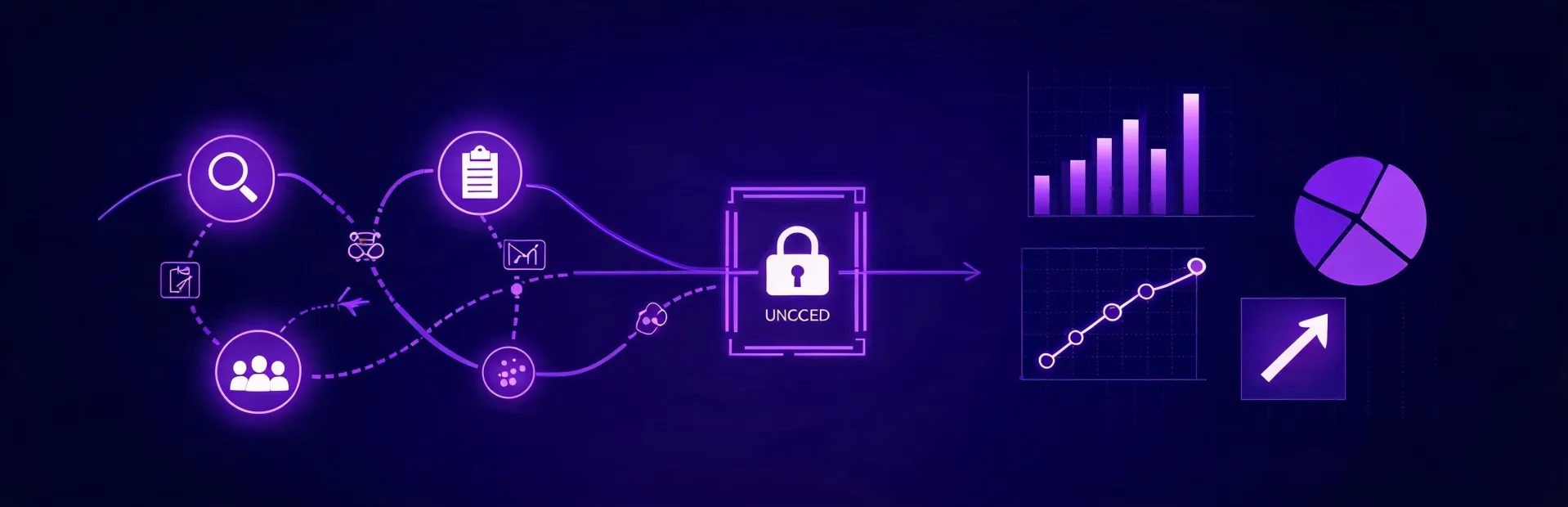
Our direction is simple: let revenue teams describe the work they need, while the system makes research steps, evidence, permissions, and review checkpoints visible.
Operating vision
Less interface switching. More inspectable work.
Traditional sales stacks distribute one prospecting task across company databases, contact tools, spreadsheets, writing assistants, and engagement software. An agent-native skill can coordinate those steps from a natural-language brief, but convenience must not erase provenance or human accountability.
Amplemarket is presented here as an installation-first workflow: users copy a precise command, run it in their chosen environment, configure approved connections, and judge the first result. That sequence sets honest expectations and keeps the runtime—not a marketing page—in control of credentials.
01 · IntentDescribe the ICP and task
02 · OrchestrationPlan discovery and enrichment
03 · EvidenceAttach sources and status
04 · JudgmentHuman approves next action
Milestones that matter in every run
Returned fields indicate where they came from, when they were observed, and whether a configured provider or inference produced them.
A person can approve, edit, or reject targeting and copy before any downstream activation, preserving a human-in-the-loop operating model.
Teams can evaluate match quality, bounce risk, and useful replies with their own controlled sample rather than relying on invented benchmark claims.
Connection principles, not a decorative logo wall
Minimum permission
Request only the scopes required by the selected research or export task.
Config-dependent status
Describe a connection as available only when the runtime and user configuration support it.
Reversible setup
Document how to remove credentials, update the skill, and uninstall it from the host agent.
Test the vision with one bounded task
Copy the command, review it, run it, and begin with a small sample that your team can inspect end to end.